
Last verified: August 2026
Army Fitness Test Tips: How to Improve Your AFT Score (2026)
The Army Fitness Test is scored out of 500 — 100 points per event, with a 60-point minimum on every event. This army fitness test tips guide covers all five events: the official standard, technique, common mistakes, and training drills. Official test standards and exercise references are sourced from ATP 7-22.01 and ATP 7-22.02; training recommendations on this page are Fitness Test Hub guidance informed by those sources. Use the free army fitness test calculator to check your score, then return here to address the events that need work.
Army Fitness Test Tips at a Glance
The army fitness test tips summary:
MDL (Max Deadlift): 3-rep max, hex bar, closed grip. 100 points at 350 lb (22-26 M/C); 60-point line at 150 lb.
HRP (Hand-Release Push-Up): 2 minutes, max reps, hands release at the bottom. 100 points at 61 reps; 60-point line at 14.
SDC (Sprint-Drag-Carry): 250 meters, 5×50m shuttles, 90-lb sled, 2×40-lb kettlebells. 100 points at 1:30; 60-point line at 2:31.
PLK (Plank): timed hold. 100 points at 3:35; 60-point line at 1:25.
2MR (Two-Mile Run): timed 2 miles. 100 points at 13:25; 60-point line at 19:45.
The army fitness test tips below are organized event by event. Every event must clear 60 points: a 350 total with one event at 55 is still a failure. Train the whole test, not your best three events.
The Overall Strategy: How to Improve Your Army Fitness Test Score
Your army fitness test score is the sum of five events, each worth up to 100 points. The fastest way to raise it is to find your lowest event and improve it first, because the 60-point floor means a weak event can fail you no matter what the other four earn.
Three army fitness test tips apply to every event. First, know your numbers: open the army fitness test standards page, find your age group and category, and write down the performance that earns 60, 70, 80, and 90 points on each event. Second, train the exact movement: the army fitness test rewards specificity, so practice the hand-release push-up, the sled drag, and the timed two-mile run the way the test scores them. Third, track progress: use the army fitness test calculator after every dress rehearsal, and watch the weakest event move.
These army fitness test tips are built on the Army's own training doctrine. ATP 7-22.02, the official exercise library, organizes training into preparation drills, conditioning drills, stability drills, and running drills — and the event-specific tips below map each event to the official drills that build it. To see how event results convert to points, check your AFT score.
Event-by-Event Army Fitness Test Tips
Each event below covers the official standard, the technique that scores, the mistakes that cost points, and the official training drills that build it.

Max Deadlift (MDL)
What it tests
The MDL measures lower-body strength and the ability to produce force from the ground, which the Army ties directly to lifting a casualty on a litter and moving equipment. It is the first event of the army fitness test.
The official standard (ATP 7-22.01)
You step inside the hex bar with feet shoulder-width apart, grasp the center of the handles with a closed grip (thumb wrapped opposite the fingers), and lift by straightening the hips and knees. A successful attempt is three continuous repetitions to standard. You get two attempts; the heaviest successful set is your raw score.
Technique that scores
Set up with the bar centered, arms fully extended, back flat, head in line with the spine. Drive through the legs — the hips should not rise before the shoulders. Lower the bar under control and touch the plates to the ground between reps. Do not rest on the ground; the movement must be continuous.
Mistakes that cost points
Knees moving together during the lift, hips rising above the shoulders, rounding the back, losing balance, dropping the bar, removing your hands between reps, or failing to touch the plates to the ground. Any of these on the second or third rep terminates the attempt.
Training drills (ATP 7-22.02)
The Preparation Drill's Squat Bender (PD 5) teaches the hip hinge. Conditioning Drill 3's Single-Leg Deadlift (CD3 2) builds posterior-chain strength and balance. Climbing Drill 1's Straight-Arm Pull (CL1 1) can help develop the grip and upper-body pulling strength needed to support loaded movements.
Army fitness test tips
Train low reps with heavy loads — for example, a 5×3 or 4×3 barbell pattern at 80-90% of your working max, plus one light technical day. Grip, setup, and technique can become limiting factors as load increases, so practice the closed grip and the reset on every rep. In the 22-26 M/C group, moving from 150 lb (60 points) to 190 lb (70 points) is a 10-point gain.
Event Score Lookup
Enter a single event result to see how many points it earns in the 22-26 M/C column of the official tables.
Hand-Release Push-Up (HRP)
What it tests
The HRP measures upper-body muscular endurance — the repetitive pushing used in combat tasks like rising from the ground and low crawling. The hand release removes every shortcut: no bouncing, no half-reps, no elastic energy.
The official standard (ATP 7-22.01)
The HRP is a two-minute timed event. Each rep has four movements: start prone with chest, hips, and thighs touching the ground; press up to full elbow lock; lower back down; release both hands and extend them to a T position, then return them to the start. Feet stay on the ground, no more than a boot's width apart.
Technique that scores
Keep a rigid body line from head to heels. At the bottom, chest, hips, and thighs must touch simultaneously. Release the hands fully and extend to the T before resetting. Lock the elbows at the top of every rep. Breathe in rhythm — one breath per rep keeps the pace honest.
Mistakes that cost points
A rep does not count if the chest, hips, or thighs do not touch together; if the hands do not fully release and extend; if the body sags or the hips pike; if the elbows do not lock; if you shift position during the release; or if you bounce off the ground. Reps that do not meet the standard do not count toward your score.
Training drills (ATP 7-22.02)
Conditioning Drill 1's Single-Leg Push-Up (CD1 5) builds pressing strength under instability. The Shoulder Stability Drill's I/T/Y/L/W Raises (SSD 1-5) build the scapular control that keeps your shoulders stable at high rep counts. Four for the Core's Bent-Leg Raise (4C 1) builds the anti-extension core that holds your body line.
Army fitness test tips
Build volume before intensity — for trained Soldiers, 3-4 sets of submaximal reps with full hand release, plus a timed two-minute set twice a week to learn pacing. Use submaximal sets that leave 2-4 reps in reserve, gradually increasing weekly volume. Add paused bottom reps (2-3 second hold at the floor) to replicate the dead-stop demand. In the 22-26 M/C group, moving from 14 reps (60 points) to 26 reps (70 points) is a 10-point gain.
Event Score Lookup
Enter a single event result to see how many points it earns in the 22-26 M/C column of the official tables.
Sprint-Drag-Carry (SDC)
What it tests
The SDC is a timed 250-meter shuttle event that measures anaerobic capacity, muscular endurance, and strength. It combines sprinting, dragging, lateral movement, and loaded carries in a single timed event, and simulates casualty extraction and moving under fire.
The official standard (ATP 7-22.01)
Five 50-meter shuttles: sprint, drag the 90-lb sled backward, lateral shuffle, carry two 40-lb kettlebells, and a final sprint. You must touch the 25-meter line with both a foot and a hand at every turn. The event is timed from GO to the finish.
Technique that scores
For training, experiment with a controlled first shuttle rather than an all-out sprint. Starting slightly below maximal effort can help you preserve speed for the drag, lateral movement, carry, and final sprint. On the drag, power with the legs, not the arms; the arms hold the straps, the legs do the work. In the lateral, keep the feet from crossing. On the carry, control the kettlebells from the pickup — swinging bells shred your grip.
Mistakes that cost points
Failing to touch the required line can invalidate a repetition under the test standard, sprinting out at 100% on segment one, pulling the sled with the arms, crossing the feet in the lateral, letting the bells swing, and skipping transition training. The transitions between segments are events within the event.
Training drills (ATP 7-22.02)
Military Movement Drill 1's Vertical, Lateral, and Shuttle Sprint (MMD1 1-3) build the movement patterns. The Guerilla Drill's Lunge Walk and Soldier Carry (GD 2-3) build loaded movement. Conditioning Drill 2's Half Jack (CD2 3) builds the work capacity the event demands.
Army fitness test tips
Train the three movements separately first — sprint 25 meters, drag a sled at your body weight, carry two kettlebells — then combine them into continuous sets. Track every practice time and beat your last one. Official Army drills for SDC work capacity: Military Movement Drill 1, the Guerilla Drill, and Conditioning Drill 2. Supplemental exercises that can support grip strength: farmer's carries, dead hangs, and plate pinches. In the 22-26 M/C group, moving from 2:31 (60 points) to 2:05 (70 points) is a 10-point gain.
Event Score Lookup
Enter a single event result to see how many points it earns in the 22-26 M/C column of the official tables.
Plank (PLK)
What it tests
The PLK measures core-static strength and endurance — the bracing strength that protects the spine under armor, packs, and prolonged prone positions. It replaced the leg tuck because it is more equitable and safer under the load of a full test day.
The official standard (ATP 7-22.01)
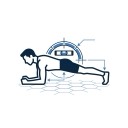
Hold a straight-line plank with forearms on the ground, elbows directly below the shoulders, hands as fists (pinky side down) or palms flat, no wider than boot-width apart. Toes on the ground, up to boot-width apart. The event is terminated if any body part other than the feet, forearms, fists, or palms touches the ground; if a foot or hand lifts off; if the hips sag or pike; or if the knees touch. You get one warning for a sagging or piking hip — a second occurrence terminates the event.
Technique that scores
Squeeze the glutes to keep the hips level — a sagging hip is the most-failed requirement. Keep the eyes on the ground directly below your face. Breathe steadily; holding your breath is what ends most planks early. Muscle shaking does not automatically end the event; the required body position must still be maintained.
Mistakes that cost points
Hips sagging or piking, knees touching the ground, lifting a hand or foot, and letting the head drift up. All of these terminate the event, and the knee touch and hand lift get no warning.
Training drills (ATP 7-22.02)
Four for the Core (4C 1-4) — Bent-Leg Raise, Side Bridge, Back Bridge, and Quadraplex — build the full core. The Hip Stability Drill (HSD 1-5) builds the hip control that keeps your pelvis level under fatigue.
Army fitness test tips
Train time under tension — work up to 2-3 holds at 60-90 seconds with perfect alignment, then extend toward your target. Do not hold your breath; a steady breathing pattern can help you maintain the position longer without unnecessarily increasing fatigue. In the 22-26 M/C group, moving from 1:25 (60 points) to 1:58 (70 points) is a 10-point gain.
Event Score Lookup
Enter a single event result to see how many points it earns in the 22-26 M/C column of the official tables.

Two-Mile Run (2MR)
What it tests
The 2MR is a test of aerobic endurance — the final event of the army fitness test, run after the deadlift, push-ups, sprint-drag-carry, and plank. It applies to dismounted movement, ruck marching, and infiltration.
The official standard (ATP 7-22.01)
The 2MR begins 10 minutes after the last Soldier completes the plank. You run at your own pace and may walk or pause, but you cannot be picked up, pulled, or pushed. Leaving the course at any point terminates the event. The clock stops when you cross the finish line at the two-mile point.
Technique that scores
Pace the first mile at or slightly under goal pace — going out too fast is the most common mistake, and the effect shows at mile 1.5. Experiment with a consistent breathing rhythm during training and use the pattern that helps you maintain your target pace. In the final 400 meters, use landmarks and drive the arms.
Mistakes that cost points
Starting too fast, skipping base mileage, and neglecting the pre-event fatigue from the SDC. The first four events can contribute to accumulated fatigue before the 2MR, so pacing and aerobic conditioning should account for the full test sequence.
Training drills (ATP 7-22.02)
Running Drill 1 (Foot Strike) builds efficient stride mechanics. Running Drill 2 (Strength) builds the leg power that carries you through the final mile. Running Drill 3 (Combinations) and Drill 4 (Corrections) refine form under fatigue.
Army fitness test tips
Example weekly structure: one timed or controlled two-mile session, one interval session, and easy aerobic volume adjusted to your current training load. Learn your target pace in advance — use the pace tool below to convert a goal time into per-lap splits. In the 22-26 M/C group, moving from 19:45 (60 points) to 18:23 (70 points) is a 10-point gain.
Event Score Lookup
Enter a single event result to see how many points it earns in the 22-26 M/C column of the official tables.
2MR Pace Tool
Enter your goal two-mile time (m:ss) to see your per-lap pace on a 400m track.
The Score Math: What Each Point Costs
Example score targets — ages 22-26, M/C column. Only selected score thresholds are shown here; see the full standards tables for every point value.
| Event | 100 pts | 90 pts | 80 pts | 70 pts | 60 pts |
|---|---|---|---|---|---|
| MDL | 350 lb | — | — | 190 lb | 150 lb |
| HRP | 61 reps | — | 37 reps | 26 reps | 14 reps |
| SDC | 1:30 | — | 1:53 | 2:05 | 2:31 |
| PLK | 3:35 | — | 2:30 | 1:58 | 1:25 |
| 2MR | 13:25 | 15:38 | — | 18:23 | 19:45 |
The army fitness test tips that matter most for your total: pick a target — 300 (General standard), 350 (higher-performance target), or 400+ (advanced target) — and read the chart backward to find the performance each event needs. Then train until your weekly dress rehearsal meets every target. The army fitness test calculator does this math for you, and the army fitness test standards page shows every age group and category. Where the table shows a dash (—), the official tables do not publish a threshold at that exact point value for that event and age group.
Training Principles from the Army's Official Exercise Library
These army fitness test tips are grounded in ATP 7-22.02, the Army's official Holistic Health and Fitness drills and exercises manual. The library is organized into:
Preparation Drills (PD): 10 warm-up movements that prepare the body for training. Conditioning Drills (CD1-3): 20 movements that build strength, power, and work capacity. Stability Drills (HSD, SSD, 4C): hip, shoulder, and core stability. Climbing Drills (CL1-2) and Guerilla Drill (GD): pulling, climbing, and loaded movement. Running Drills (RUD1-4): foot strike, strength, combinations, and corrections. Military Movement Drills (MMD1-2): vertical, lateral, and shuttle movement. Medicine Ball Drills (MB): power and coordination.
The Army's training principle is progressive overload with deliberate recovery: build volume first, add intensity second, and taper before the test. The event-specific army fitness test tips above map each event to the official drills that build it — train the drill, and the event follows. Build these principles into a structured week with the AFT training plan.
Test-Day Strategy
The army fitness test is completed in order on the same day within a 120-minute test period under the current test protocol: MDL, HRP, SDC, PLK, a 10-minute rest, then the 2MR. Army fitness test tips for test day: warm up for 15+ minutes with the Preparation Drill and a few unloaded deadlifts; know your goal weight and your target times before you step to the line; pace the first sprint and the first mile conservatively; and use the 10-minute rest to reset mentally for the run. A controlled start can help prevent early fatigue and improve the ability to maintain pace through the final event. Event pacing and test-day flow are covered on the test day and retest page.
✓Official Source
“The AFT consists of five test events: the 3 Repetition Maximum Deadlift (MDL), the Hand-Release Push-Up (HRP), the Sprint-Drag-Carry (SDC), the Plank (PLK) and the 2-Mile Run.”
Source: U.S. Army ATP 7-22.01 (Holistic Health and Fitness Testing), §2-5
Verified Facts
The official standards and test-protocol facts below are sourced from Army publications. Training recommendations and example programming are Fitness Test Hub guidance and are labeled separately.
The Army Fitness Test has five events: max deadlift, hand-release push-ups, sprint-drag-carry, plank, and a two-mile run.
— U.S. Army Directive 2025-06
Each AFT event is scored out of 100 points for a maximum total of 500, with a 60-point minimum per event.
— U.S. Army AFT Score Tables
The MDL uses a closed grip and requires three continuous repetitions to standard, with two attempts allowed.
— U.S. Army ATP 7-22.01
The HRP is a two-minute timed event; a repetition does not count if the Soldier makes a movement error.
— U.S. Army ATP 7-22.01
The SDC is a 250-meter shuttle event with a 90-pound sled and two 40-pound kettlebells.
— U.S. Army ATP 7-22.01
The PLK is terminated if any body part other than the feet, forearms, fists, or palms touches the ground.
— U.S. Army ATP 7-22.01
Soldiers complete the five AFT events in order on the same day within a 120-minute test period.
— U.S. Army ATP 7-22.01
The Army's official exercise library, ATP 7-22.02, provides preparation, conditioning, stability, and running drills for AFT training.
— U.S. Army ATP 7-22.02
Related Army Fitness Test Pages
Army Fitness Test Tips: FAQ
Direct answers to the questions Soldiers ask most about improving their AFT score.
How can I improve my Army Fitness Test score?
Find your lowest event and move it first. Every event must clear 60 points, so train the whole test, not your best three events.
Which AFT event is often considered the most demanding?
The Sprint-Drag-Carry is demanding because it combines sprinting, dragging, lateral movement, loaded carries, and transitions in one timed event.
How do I improve my sprint-drag-carry time?
Train the three movements separately, then combine them. Practice line touches, use your legs on the drag, and do grip work.
How do I improve my two-mile run time?
Run a timed two-mile weekly, add 400-800m intervals, keep easy aerobic volume, and learn your target pace.
How many points is each AFT event worth?
Up to 100 points each, for a maximum total of 500 across the five events.
What is the 60-point rule on the AFT?
Every event must score at least 60 points. A total of 350 with one event at 55 is still a failure.
How do I train for the AFT deadlift?
Train low reps with heavy loads — 5×3 or 4×3 at 80-90% of your working max, plus grip and hip-hinge work.
How many push-ups do I need to pass the AFT?
In the 22-26 M/C group, 14 hand-release push-ups earn the 60-point minimum; 61 earn 100 points.
How long is the AFT?
All five events are completed in order on the same day within a 120-minute test period, including the 10-minute rest before the run.
What should I do if one AFT event is much weaker than the others?
Identify the lowest-scoring event, determine how many points you need to reach your target, and prioritize that event while maintaining the others. For a personalized schedule, use your current scores and target date to build an individualized plan.
Check Your Army Fitness Test Score
Use the free army fitness test calculator to score your five events, then check the army fitness test standards page for full age-group data. For a complete weekly schedule, start the army fitness test training plan. Official standards and test-protocol facts on this page are sourced from Army publications; training recommendations are Fitness Test Hub guidance — last verified August 2026.